
What Happens to Our DNA as We Age?
Have you ever wondered why our hair turns gray, our skin develops wrinkles, or our bodies become more vulnerable to diseases as we get older?
Many people think aging only happens on the outside. But some of the biggest changes occur deep inside our cells, where our DNA is stored. DNA carries the genetic code, or instructions that make up important proteins that every cell needs to function, whether it is a skin cell, a muscle cell, or a neuron in the brain. Over time, however, these genetic instructions can become damaged, making it harder for cells to maintain normal function.
The Sources of DNA Damage
Although our DNA is protected inside the nucleus of a cell, it is constantly under stress. Every day, our DNA faces threats from environmental factors like ultraviolet light, pollution, and toxic chemicals. Moreover, the danger also comes from within. Normal metabolic processes involved in our daily energy production, such as cellular respiration, can generate unstable molecules, called reactive oxygen species (ROS) as byproducts. When these build up, they create oxidative stress that can harm DNA, proteins, and other components of the cell.
DNA Damage vs. DNA Repair
Fortunately, our cells have evolved highly efficient DNA repair systems. These systems act like proofreaders, constantly searching for damage and fixing mistakes before they become a problem. But like any repair crew, they are not perfect. Occasionally, some damage escapes repair or is repaired incorrectly, causing permanent changes in the DNA sequence known as mutations. As cells grow older, DNA damage gradually accumulates and repair systems become less efficient. As a result, mutations can become more frequent over time. While many mutations are harmless, some can disrupt important cellular functions and contribute to several diseases, such as cancer and heart disease.
Telomeres: The Replicative Countdown Clock
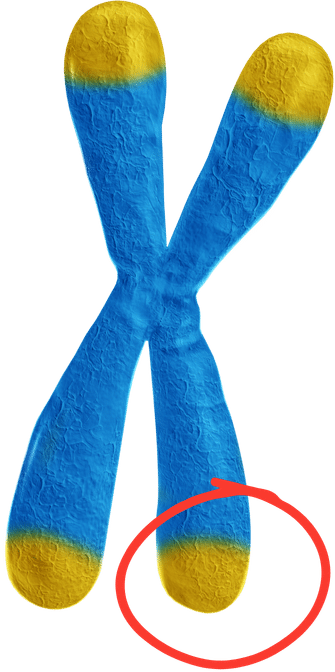
DNA is organized into chromosomes and at the ends of these chromosomes are regions called telomeres. They act like protective caps that prevent chromosomes from deteriorating or fusing together.
However, each time a cell divides, telomeres become slightly shorter because normal DNA replication cannot fully copy the very ends of chromosomes. This is what happens as we age and our cells continue to divide where the telomeres gradually lose DNA sequences. This makes our chromosomes more fragile and vulnerable to damage. When telomeres become too short, cells often enter a state called senescence, where they stop dividing. These cells are called “zombies” because they remain alive but no longer function properly.
What Happens to these “Zombie Cells”?
Research shows that these zombie cells remain metabolically active in the body and secrete inflammatory molecules that can degrade nearby cells and gradually worsen tissue function.
In recent years, scientists have identified these cells as a major driver of age-related decline. In mouse studies, drugs known as senolytics have been used to selectively remove senescent cells, improving muscle function, vascular health, and even some aspects of brain aging in experimental models.
DNA Aging in the Brain
The impact of DNA damage is especially important in our brain. Neurons stop dividing shortly after birth and must last an entire human lifetime.
Because neurons cannot be replaced, they are highly sensitive to the accumulation of DNA damage. Over decades, unrepaired DNA damage can build up and weaken the neuron’s ability to maintain its structure, communicate effectively and perform essential cognitive functions such as memory and thinking.
This is especially relevant in neurodegenerative diseases like Alzheimer’s and Parkinson’s, where defective DNA repair systems and increased genomic instability are thought to contribute to neuronal dysfunction and loss.

Can We Slow Aging to Improve Overall Health?
One of the major goals of modern biology is to understand whether aging can be slowed or partially reversed to improve health and reduce disease risk. Scientists are studying how cells repair DNA, how telomeres protect chromosomes, and why some individuals remain healthy well into advanced age.
They are also looking beyond humans and examining various long-lived species, such as Greenland sharks and bowhead whales, that show unusual resistance to aging-related decline.

In recent groundbreaking experiments, scientists have used a set of proteins known as Yamanaka factors to partially reprogram aged cells. These factors act as the cell’s “reset button” to restore more youthful patterns of gene activity without changing the underlying DNA sequence. In animal models, this process has been shown to reverse some signs of aging and has improved functions such as vision and muscle strength.
This research reached an important milestone in January 2026 when the first human clinical trial of cell rejuvenation therapy was approved. The experimental treatment, called ER-100, uses the same Yamanaka factors to help restore the function of damaged retinal cells in patients with certain eye diseases. The trial is mainly testing safety, but if successful, patients could regain some of the vision that they have lost.
As the world population is aging, a greater number of people are at a risk of developing various age-onset diseases. As a result, research in such areas is fundamental to understanding how biological “wear and tear” can be managed more effectively.
By studying DNA damage, repair systems, and cellular aging, researchers are looking into newer strategies of developing the next generation of treatments that can tackle multiple chronic diseases simultaneously to improve long-term health and quality of life.
Maisha Maliha Promi
Ph.D. Researcher
Lab of Jeremy Van Raamsdonk
Research Institute of the McGill University Health Centre (RI-MUHC)